Lab-grown diamonds environmental impact in a nutshell
The lab-grown diamonds environmental impact depends mostly on electricity. Growing diamonds avoids mining's land disturbance and waste rock, but it uses a lot of energy over weeks of growth, so a stone grown on coal-heavy power can carry a meaningful carbon footprint, while one grown on renewable power can be much lower.
That makes blanket claims like lab-grown is always green or lab-grown is worse than mining equally unreliable. The truth sits in the details of each producer, and buyers who care about sustainability need to look past slogans to evidence.
This guide explains where the impacts come from, how to interpret sustainability claims and certifications, and practical ways to make a lower-impact jewellery choice in India.
For Indian buyers, the question often comes up when choosing an engagement ring or a festive gift for someone who cares about climate. A useful approach is to treat sustainability like any other quality claim, such as colour or clarity: it should be described specifically, ideally verified by an independent party, and reflected fairly in the price you are asked to pay.
Our top 20 picks
- 1
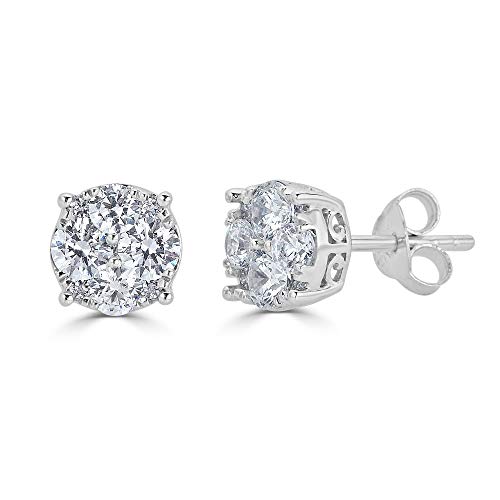
Fifth and Fine
Women Round Diamond Stud Earrings Set In 925 Sterling Silver Natural or Lab Grown 14K Gold Bezel White Yellow
₹14,151₹14,1510% OFF
Colour: Yellow · Brand: Fifth and Fine · Best for: weddings, festivals, anniversaries, everyday luxury and gifting
- 2

Generic
Nilkanth Jewels 18Kt Vermeil Gold Plated 925 Sterling Silver Floral Moissanite Diamond Stud Earrings for Women
₹6,957₹7,99913% OFF
Colour: Silver · Brand: Generic · Best for: weddings, festivals, anniversaries, everyday luxury and gifting
- 3

Redgem
Redgem Silver Stud Earrings for Women and Girls Moissanite Colorless
₹25,954₹50,97049% OFF
Colour: Silver · Brand: Redgem · Best for: weddings, festivals, anniversaries, everyday luxury and gifting
- 4

GOLDHARTZ
Goldhartz 925 Sterling Silver South Sea Pearl Earrings with Moissanite Diamonds, 10MM, 14K Gold Micron Plated
₹5,108₹14,59665% OFF
Colour: Silver · Brand: GOLDHARTZ · Best for: weddings, festivals, anniversaries, everyday luxury and gifting
- 5

Generic
Nilkanth Jewels 18Kt Vermeil Gold Plated 925 Sterling Silver Moissanite Diamond Floral Stud Earrings for Women
₹5,359₹6,99923% OFF
Colour: Silver · Brand: Generic · Best for: weddings, festivals, anniversaries, everyday luxury and gifting
- 6

GIVA
GIVA 18K Yellow Gold Moonbeam Lab Grown Diamond Earrings Gifts for Women & Girls With Certificate of Authentic
₹57,144₹66,02213% OFF
Colour: Yellow · Brand: GIVA · Best for: weddings, festivals, anniversaries, everyday luxury and gifting
- 7

GIVA
GIVA 18K Rose Gold Wonderful Whimsy Lab Grown Diamond Earrings Gifts for Women & Girls With Certificate of Aut
₹52,824₹59,47011% OFF
Colour: Gold · Brand: GIVA · Best for: weddings, festivals, anniversaries, everyday luxury and gifting
- 8

GIVA
GIVA 18K Yellow Gold Glitter Punch Lab Grown Diamond Earrings Gifts for Women & Girls With Certificate of Auth
₹76,092₹79,8945% OFF
Colour: Yellow · Brand: GIVA · Best for: weddings, festivals, anniversaries, everyday luxury and gifting
- 9

GIVA
GIVA 18K Yellow Gold Starstruck Lab Grown Diamond Earrings Gold Gifts for Women & Girls With Certificate of Au
₹37,573₹44,44715% OFF
Colour: Yellow · Brand: GIVA · Best for: weddings, festivals, anniversaries, everyday luxury and gifting
- 10

GIVA
GIVA 18K Yellow Gold Cosmic Star Lab Grown Diamond Earrings Gifts for Women & Girls With Certificate of Authen
₹39,716₹45,50713% OFF
Colour: Yellow · Brand: GIVA · Best for: weddings, festivals, anniversaries, everyday luxury and gifting
- 11

SPARQ
0.22 Ct Lab Grown Diamond Stud Earrings for Women, 925 Silver
₹11,830₹11,8300% OFF
Colour: Silver · Brand: SPARQ · Best for: weddings, festivals, anniversaries, everyday luxury and gifting
- 12

SPARQ
0.17 Ct Lab Grown Diamond Stud Earrings for Women, 925 Silver
₹9,912₹9,9120% OFF
Colour: Silver · Brand: SPARQ · Best for: weddings, festivals, anniversaries, everyday luxury and gifting
- 13

SPARQ
0.12 Ct Lab Grown Diamond Stud Earrings for Women, 925 Silver
₹7,026₹7,0260% OFF
Colour: Silver · Brand: SPARQ · Best for: weddings, festivals, anniversaries, everyday luxury and gifting
- 14

SPARQ
Floral 0.14 Ct Lab Grown Diamond Stud Earrings for Women, 925 Silver
₹10,054₹10,0540% OFF
Colour: Silver · Brand: SPARQ · Best for: weddings, festivals, anniversaries, everyday luxury and gifting
- 15

SPARQ
Floral Grace 0.1 Ct Lab Grown Diamond Stud Earrings for Women, 925 Silver
₹5,404₹5,4040% OFF
Colour: Silver · Brand: SPARQ · Best for: weddings, festivals, anniversaries, everyday luxury and gifting
- 16

SPARQ
0.12 Ct Lab Grown Diamond Stud Earrings for Women, 925 Silver
₹7,676₹7,6760% OFF
Colour: Silver · Brand: SPARQ · Best for: weddings, festivals, anniversaries, everyday luxury and gifting
- 17

SPARQ
0.15 Ct Lab Grown Diamond Stud Earrings for Women, 925 Silver
₹9,034₹9,0340% OFF
Colour: Silver · Brand: SPARQ · Best for: weddings, festivals, anniversaries, everyday luxury and gifting
- 18

SPARQ
Floral 0.16 Ct Lab Grown Diamond Stud Earrings for Women, 925 Silver
₹10,064₹10,0640% OFF
Colour: Silver · Brand: SPARQ · Best for: weddings, festivals, anniversaries, everyday luxury and gifting
- 19

SPARQ
0.46 Ct Lab Grown Diamond Stud Earrings for Women, 925 Silver
₹19,952₹19,9520% OFF
Colour: Silver · Brand: SPARQ · Best for: weddings, festivals, anniversaries, everyday luxury and gifting
- 20

SPARQ
0.36 Ct Lab Grown Diamond Earrings for Women, 925 Silver
₹16,686₹16,6860% OFF
Colour: Silver · Brand: SPARQ · Best for: weddings, festivals, anniversaries, everyday luxury and gifting
Where the energy goes
Both CVD and HPHT require sustained energy. CVD reactors run microwave or other plasma sources for weeks, while HPHT presses maintain extreme pressure and temperature. Cooling systems, gas production and facility operations add further demand.
After growth, stones are cut and polished, which uses electricity and water but far less than growth. Post-growth treatment adds another heat-intensive step for many CVD stones.
Because energy is the main driver, the location of a facility and the grid mix it draws from matters enormously. A grower using solar, hydro or wind power, or buying renewable energy credits, has a very different footprint from one on fossil-fuel power.
Producers rarely publish detailed energy figures per carat, and when they do, the methods differ. That is why comparing two brands on carbon claims is difficult. Prefer sellers who explain how their figures were calculated and which parts of the process they include, rather than those who quote one impressive number without context.
What mining impacts look like
Diamond mining moves large volumes of earth and rock to recover small amounts of diamond. Impacts include land disturbance, habitat change, water use and fuel for heavy machinery. Large modern mines often have rehabilitation obligations and environmental management systems, while artisanal mining can cause localised damage with less oversight.
Mining companies also report carbon emissions, and some invest in renewable energy and land restoration. Comparisons between mined and lab-grown footprints therefore vary depending on which mine, which grower and which methodology is used.
Industry-funded studies on both sides have reached different conclusions. That is a reason to be sceptical of any single number presented as definitive.
Water use is another factor. Mining can draw heavily on local water sources, while lab facilities use water mainly for cooling, and cutting and polishing also use water. Responsible operators in both sectors recycle water, so ask about it if this matters to you.
Reading sustainability claims
Look for specific, verifiable statements. Grown using renewable energy is stronger if it names the energy source or certification. Carbon neutral claims usually rely on offsets, so ask what kind and whether they are independently verified. Eco-friendly with no detail is just marketing.
Some lab-grown producers seek third-party sustainability certifications that assess energy use, emissions and other factors. These programmes vary in rigour. A certification name on a listing is a starting point; read what it actually covers.
Also watch for claims about the whole piece. A sustainable diamond in newly mined gold with high-energy transport and heavy packaging is only partly sustainable. Recycled metal and minimal packaging complete the picture.
Packaging and shipping are smaller but visible parts of the footprint. Some brands now use recycled boxes and minimal plastic. These are nice touches, but they should not distract from the much larger question of how the stone itself was grown.
India's role in the picture
India is a major centre for diamond cutting and polishing and has become an important producer of lab-grown diamonds, particularly CVD stones. The environmental footprint of Indian-grown stones depends on how growers source power, and India's grid has a significant fossil-fuel share alongside growing renewable capacity.
Some Indian growers have invested in solar and other renewable sources, and some promote this to buyers. As with any claim, ask the seller for details rather than assuming.
Domestic growing and cutting can reduce transport stages compared with stones moved across several countries, though transport is usually a small portion of the overall footprint compared with growth energy.
Interest in sustainable growth is also driving investment in better technology, such as more efficient reactors and on-site solar. Over time, this could lower the footprint of lab-grown production further, though how quickly it happens will vary by company and region.
Practical ways to lower your impact
Choose sellers who disclose energy sourcing or carry credible sustainability certification. Ask for recycled gold or platinum settings. Prefer pieces made to last: solid construction, secure settings and timeless design you will not tire of in two years.
Consider redesigning existing jewellery. Using family gold for a new setting avoids new metal extraction, and many Indian jewellers offer redesign services. Pairing heirloom gold with a lab-grown stone is a practical, lower-impact option.
Buy fewer, better pieces. A single pair of well-made lab-grown studs worn for a decade has a smaller footprint per wear than many fashion pieces replaced frequently.
Caring for jewellery properly is another low-impact habit. Regular cleaning, annual prong checks and safe storage prevent loss and damage, which means fewer replacements. A lost diamond is the least sustainable diamond of all, so a quick check of your settings before a wedding season is worth the few minutes it takes.
Balancing sustainability with other priorities
Sustainability is one factor among several, alongside ethics, budget, beauty and family traditions. Some buyers prioritise avoiding mining; others prioritise supporting mining communities; others focus on longevity and reuse. Each is a defensible position.
What is not defensible is paying a premium for a vague claim. If a seller charges more for a sustainable stone, ask what you get for it, and compare with similar stones without the label.
Being curious and asking specific questions encourages the whole industry toward better transparency, which benefits every buyer.
If a sustainability claim is the deciding factor for you, ask the seller to put it in writing on the invoice or product page. Sellers who are confident in their claims usually agree, and the written statement gives you something concrete to refer back to.
Questions to ask a seller about sustainability
Where was the stone grown, and what energy powers the facility? Is that energy renewable, and is it verified by any independent scheme? Has the producer been certified by a third party for sustainability, and what does that certification measure?
Is the metal in the setting recycled, and can the seller confirm that in writing? What packaging is used, and is it recyclable? Does the seller offer repair, resizing and redesign services so the piece stays in use for longer?
You will not always get complete answers, especially from smaller sellers, but the way a jeweller responds tells you a lot. Clear, specific answers suggest a seller who has thought about the issue; vague reassurances suggest the label is mostly marketing.
Most of all, avoid paying extra for a green label you cannot check. Spend that money on better cut quality or a sturdier setting, which will help the piece last longer and be worn more often.
Bottom line
Lab-grown diamonds avoid mining impacts but use significant energy, so their environmental profile depends heavily on the producer's power source and practices. Neither lab-grown nor mined is universally greener.
Look for specific, verified claims, choose recycled metals, buy pieces you will wear for years and consider redesigning heirlooms. These steps make a bigger difference than any single label.
With that approach, you can enjoy lab-grown jewellery knowing you made a considered choice rather than accepting marketing at face value.