Why are lab-grown diamonds cheaper? Three reasons
Why are lab-grown diamonds cheaper? Mainly because supply can scale with technology, production costs keep falling, and there is no rarity premium built into the price. A mined diamond's price reflects exploration, extraction and finite deposits, while a lab-grown stone's price reflects equipment, energy, cutting and margins, which keep getting more efficient.
The price gap often surprises Indian shoppers who grew up seeing diamonds as precious assets. But the gap has nothing to do with quality. A lab-grown stone can be as white, clean and brilliant as a mined one, and it is real diamond.
This guide explains the economics in plain terms, why the gap has widened over time and what still drives the final price of a lab-grown ring, pendant or pair of studs.
It is also worth separating the stone price from what you see on a shop tag. Retail prices include the jeweller's design, labour and service costs, so even if the stone itself has become much cheaper, a finished ring may not fall in price by the same proportion. Understanding both layers helps you judge whether a listing is fair.
Our top 20 picks
- 1

Zuki
The Tess Lab-Grown Diamond Earrings
₹7,353₹12,25540% OFF
Brand: Zuki · Best for: weddings, festivals, anniversaries, everyday luxury and gifting · Check the Amazon listing for size, warranty and return policy
- 2
Sparkles
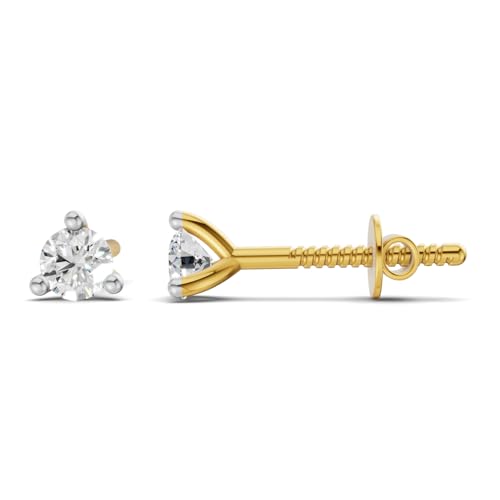
0.1 Ct Lab Grown Diamond Stud Earrings for Women, 14K Yellow Gold
₹10,581₹10,5810% OFF
Colour: Yellow · Brand: Sparkles · Best for: weddings, festivals, anniversaries, everyday luxury and gifting
- 3

EMORI
EMORI Glimmering Diamond Tennis Bracelet
₹3,92,688₹3,92,6880% OFF
Brand: EMORI · Best for: weddings, festivals, anniversaries, everyday luxury and gifting · Check the Amazon listing for size, warranty and return policy
- 4

SURATDIAMOND
SURATDIAMOND Jewellery 27-Stone Pink Rhodolite Full Eternity Ring 925 Sterling Silver Band Women’s Pink Gemsto
₹11,950₹11,9500% OFF
Colour: Silver · Brand: SURATDIAMOND · Best for: weddings, festivals, anniversaries, everyday luxury and gifting
- 5

SURATDIAMOND
SURATDIAMOND Jewellery Round Purple Amethyst Full Eternity Ring 925 Sterling Silver Stackable Band Women’s Ame
₹9,176₹9,1760% OFF
Colour: Purple · Brand: SURATDIAMOND · Best for: weddings, festivals, anniversaries, everyday luxury and gifting
- 6

Astro Cart
Astro Cart Moissanite Ring 0.5 Carat Moissanite Diamond Ring VVS1 Clarity Moissanite Stone Ring मोइसानाइट डायम
₹34,299₹67,00049% OFF
Brand: Astro Cart · Best for: weddings, festivals, anniversaries, everyday luxury and gifting · Check the Amazon listing for size, warranty and return policy
- 7

P.C. Chandra Jewellers
P.C. Chandra Jewellers 14KT (585) Yellow Gold Solitaire-Style Ring for Women Certified Natural Diamond Timeles
₹13,757₹14,7046% OFF
Colour: Yellow · Brand: P.C. Chandra Jewellers · Best for: weddings, festivals, anniversaries, everyday luxury and gifting
- 8

Shaya
Shaya by Caratlane Natural Diamonds in 925 Silver Eternity Stud Earrings SI Clarity F-G Color Fine Jewellery G
₹11,280₹14,10020% OFF
Colour: Silver · Brand: Shaya · Best for: weddings, festivals, anniversaries, everyday luxury and gifting
- 9

KEEMTI
KEEMTI Lab Grown Diamond Ring For Women 925 Sterling Silver Anti Tarnish
₹5,572₹6,96420% OFF
Colour: Silver · Brand: KEEMTI · Best for: weddings, festivals, anniversaries, everyday luxury and gifting
- 10

KEEMTI
KEEMTI Lab Grown Diamond Ring For Women 925 Sterling Silver Anti Tarnish
₹6,391₹7,98920% OFF
Colour: Silver · Brand: KEEMTI · Best for: weddings, festivals, anniversaries, everyday luxury and gifting
- 11

KEEMTI
KEEMTI Lab Grown Diamond Ring For Women 925 Sterling Silver Anti Tarnish
₹6,830₹8,53720% OFF
Colour: Silver · Brand: KEEMTI · Best for: weddings, festivals, anniversaries, everyday luxury and gifting
- 12

KEEMTI
KEEMTI Lab Grown Diamond Ring For Women 925 Sterling Silver Anti Tarnish
₹5,299₹6,31216% OFF
Colour: Silver · Brand: KEEMTI · Best for: weddings, festivals, anniversaries, everyday luxury and gifting
- 13

KEEMTI
KEEMTI Lab Grown Diamond Ring For Women 925 Sterling Silver Anti Tarnish
₹6,638₹7,98517% OFF
Colour: Silver · Brand: KEEMTI · Best for: weddings, festivals, anniversaries, everyday luxury and gifting
- 14

KEEMTI
KEEMTI Lab Grown Diamond Ring For Women 925 Sterling Silver Anti Tarnish
₹11,028₹13,78620% OFF
Colour: Silver · Brand: KEEMTI · Best for: weddings, festivals, anniversaries, everyday luxury and gifting
- 15

KEEMTI
KEEMTI Lab Grown Diamond Ring For Women 925 Sterling Silver Anti Tarnish
₹12,300₹15,06218% OFF
Colour: Silver · Brand: KEEMTI · Best for: weddings, festivals, anniversaries, everyday luxury and gifting
- 16

KEEMTI
KEEMTI Lab Grown Diamond Ring For Women 925 Sterling Silver Anti Tarnish
₹10,577₹13,22120% OFF
Colour: Silver · Brand: KEEMTI · Best for: weddings, festivals, anniversaries, everyday luxury and gifting
- 17

RoopMohana
RoopMohana 925 Silver Gold Toned Earrings with Mother of Pearl Round Accents Polki Style Stones and Moissanite
₹12,130₹12,1300% OFF
Colour: Silver · Brand: RoopMohana · Best for: weddings, festivals, anniversaries, everyday luxury and gifting
- 18

Lukson
Lukson 14K Gold Pear Solitaire Stud Earring in Yellow Gold with Lab Grown Diamond
₹33,429₹42,55221% OFF
Colour: Yellow · Brand: Lukson · Best for: weddings, festivals, anniversaries, everyday luxury and gifting
- 19

EMORI
EMORI Glimmering Diamond Tennis Bracelet in 18KT Gold for Women Yellow Authentic & Certified Lab Diamonds
₹4,73,998₹4,73,9980% OFF
Colour: Yellow · Brand: EMORI · Best for: weddings, festivals, anniversaries, everyday luxury and gifting
- 20

AINUOSHI
AINUOSHI 2-4CT Moissanite Engagement Ring, 3 Stone Wedding Band for Women, 925 Sterling Silver Round Cut Diamo
₹14,151₹14,1510% OFF
Colour: Silver · Brand: AINUOSHI · Best for: weddings, festivals, anniversaries, everyday luxury and gifting
Supply: scalable versus finite
Natural diamonds form over geological time and are found only in specific deposits. Finding and developing a new mine takes years of exploration and investment, and output is limited by the deposit. That natural scarcity supports prices.
Lab-grown capacity can expand by adding reactors or presses. When demand grows, producers can build more equipment, and many have done so rapidly. More supply tends to push prices down.
Because growers compete to sell output, especially in popular sizes, competition further compresses prices, much as it does for other manufactured goods.
Producers in several countries have entered the market, including large growing operations in India and elsewhere. That broad base means no single supplier controls availability, unlike the more concentrated natural diamond supply chain. Broad competition is a major reason prices have not stayed high.
Production costs and technology
Early lab-grown production was slow and expensive, and gem-quality output was limited. Over time, growers improved reactor design, growth rates, yields and the ability to grow larger stones. Each improvement reduces the cost per carat.
Energy remains a major cost, along with equipment, skilled staff and cutting. As processes become more efficient, those costs are spread over more carats.
Technology also improves quality consistency, meaning fewer rejected stones and more high-grade output, which further lowers the effective cost of top grades.
Cutting costs also matter. Many lab-grown stones are cut in India, where skilled cutting is efficient at scale. As cutters handle more lab-grown rough, they streamline planning and polishing for it, which helps keep finished-stone prices low.
No rarity premium
Natural diamond pricing includes a premium for rarity and the long tradition of diamonds as precious heirlooms. That premium is supported by marketing, trading networks and established exchange practices.
Lab-grown stones do not carry that premium. Buyers value them for beauty and price rather than scarcity, so retailers cannot charge a rarity premium for long without losing customers to competitors.
This is also why lab-grown resale is low: the market does not attach a scarcity value to them.
Some jewellers do try to position lab-grown stones as premium luxury products, with high-end branding and design. In those cases, you pay for the brand experience as much as the stone. That is fine if you value it, but understand that the underlying stone cost is not the reason for the higher price.
Why the gap keeps changing
Over recent years, lab-grown prices have fallen considerably while natural prices have moved differently depending on size and quality. The gap is not fixed; it changes with production capacity, demand and market sentiment.
Avoid relying on a specific percentage figure you read online, as it may be outdated or refer to different sizes and grades. Instead, compare live listings for similar stones at the time you buy.
Price changes also differ by category. Small melee, one-carat rounds and large fancy shapes may each follow their own trends.
For buyers, this movement means that comparing a quote from last year with one from today can be misleading. If a friend paid a certain amount for a one-carat stone a year or two ago, the same grade may cost noticeably less now. Always benchmark against current listings.
What still adds to the final price
In finished jewellery, the stone is only one component. Metal weight and purity, making charges, setting labour, design complexity, branding, packaging, certification and GST all contribute. A lab-grown pendant with a small stone in substantial 18K gold can cost more than the stone alone suggests.
Making charges vary widely between jewellers, sometimes quoted as a percentage of metal value and sometimes per gram or flat. Ask for a breakdown so you can compare like with like.
Certification adds cost for centre stones but is worth it. Branded jewellers may also add a premium for design, after-sales service and exchange policies.
GST is charged on jewellery in India, and the rate applies to the total value including making charges. Ask whether the quoted price includes GST, because some listings show pre-tax prices. Insurance and shipping for online orders may also be extra.
How to get good value
Focus spend where the eye notices: cut quality and size. Slightly lower colour or clarity grades that still look clean can save money without changing appearance.
Compare total price including metal weight and making charges, not just the stone. Ask about exchange or upgrade policies, which can add value over time.
Be wary of extreme discounts on supposedly natural diamonds; a stone priced like lab-grown may be lab-grown. Always check the report.
Timing your purchase around festive sales can help, but compare carefully. Some discounts apply only to making charges, not to the stone or metal, so a large-sounding percentage off may translate into a modest saving on the total. Look at the final payable amount rather than the discount headline.
If two quotes differ widely, ask each seller to explain the difference in writing. A clear answer is itself a sign of a trustworthy jeweller.
Price per carat and size jumps
Diamond prices are usually quoted per carat, and the per-carat price rises as stones get larger because larger rough is rarer. For natural diamonds, this rise is steep, especially at popular thresholds like half a carat, one carat and two carats. Lab-grown stones follow a similar shape but with a much lower starting point and a gentler climb.
That is why lab-grown makes the biggest difference at larger sizes. The saving on a small accent diamond may be modest in rupee terms, while the saving on a one-carat or larger solitaire can be dramatic. Buyers who want a big centre stone are the ones who benefit most.
A smart trick for either type is to buy just below a popular threshold, such as 0.90 carat instead of 1.00 carat. The visual difference is tiny, while the price step can be noticeable, especially for natural stones.
Shape also influences price per carat. Rounds usually cost more because cutting them wastes more rough, while ovals, cushions and pears can offer more visible size for the money.
Lab-grown pricing also opens design possibilities that were once out of reach, like tennis bracelets, eternity bands and multi-stone pendants with consistent quality throughout. If you have always admired such pieces, lab-grown may finally put them within a realistic budget.
Above all, remember that a lower price is not a compromise on the diamond itself. It is simply a different market, and it lets more women enjoy real diamond jewellery for everyday wear, festivals and milestones.
Summary
Lab-grown diamonds are cheaper because of scalable supply, falling production costs and no rarity premium, not because they are lesser diamonds.
Finished jewellery prices still depend on metal, craftsmanship, branding and policies, so compare the full breakdown when you shop.
Understanding these drivers helps you pay a fair price and choose the piece that gives you the most sparkle for your rupee.